
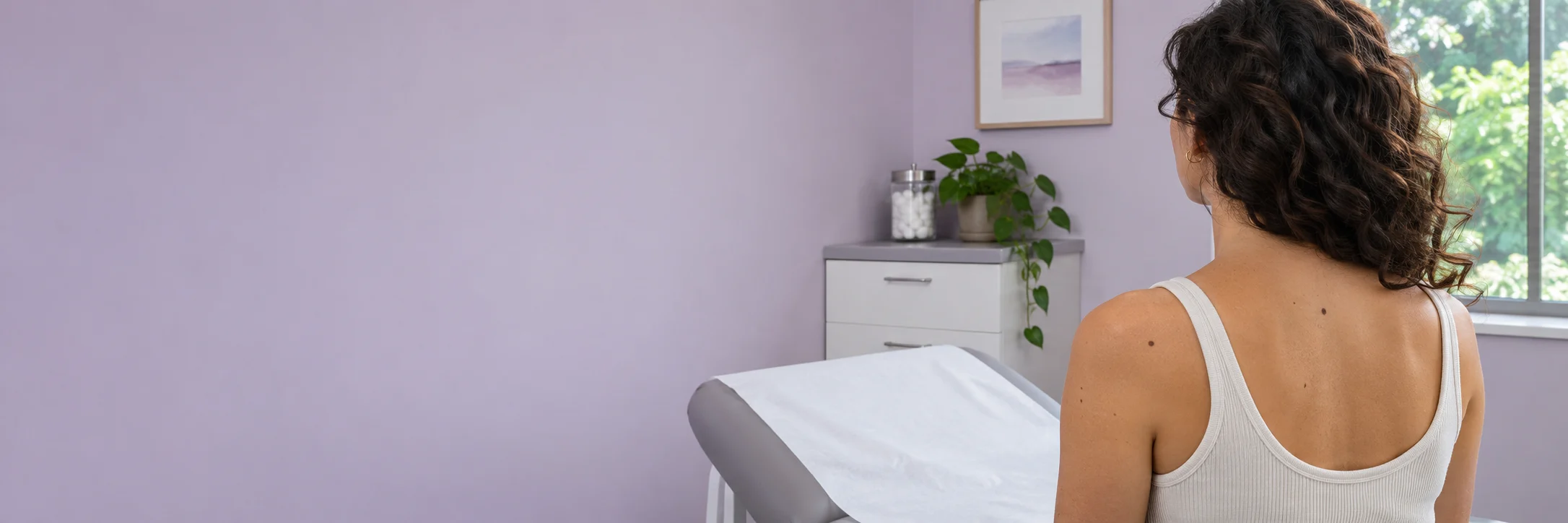
Atypical Mole Removal
When an unusual mole needs attention
Atypical moles can differ from ordinary moles in their shape, color, size, or overall appearance. An unusual appearance does not automatically mean cancer, but changes deserve a professional assessment. A dermatologist considers each spot alongside your other moles and personal risk factors. At Nahhas Dermatology in Toledo, the goal is to clarify which findings need investigation. Some moles can be monitored, while others may need a biopsy or removal.
Discussing changes at your consultation
Describe when the mole appeared and any changes in color, shape, sensation, or size. Mention bleeding, persistent itching, previous biopsies, and any personal or family history of melanoma. Earlier photographs may help your dermatologist understand how the area has changed over time. Your examination may include a closer assessment with a dermatoscope and comparison with surrounding spots. Ask which changes should prompt a call and whether photographs or monitoring are recommended.
Biopsy and removal guided by findings
If a mole is concerning, your dermatologist recommends a biopsy method suited to that lesion. Local anesthesia is commonly used, and the technique determines whether stitches may be needed. Tissue is examined by a pathology specialist to help establish an accurate diagnosis. The report and examination guide decisions about observation, further removal, or other recommended care. Discuss scarring, bleeding, infection, and how you will receive results before the procedure.
Caring for the biopsy or removal site
Follow your written wound care instructions and ask about bathing, dressings, and activity restrictions. Avoid picking the healing area or applying unfamiliar products without checking with your dermatologist. Contact the practice about increasing pain, spreading redness, persistent bleeding, or other unexpected symptoms. Do not attempt to remove a mole yourself with blades, chemicals, or advertised home products. Keep any scheduled wound review and confirm when stitches should be removed if applicable.
Continuing skin surveillance in Toledo
Make sure you receive your pathology results and understand whether additional treatment is needed. Your dermatologist can recommend a skin examination schedule based on your history and findings. Report a returning spot, a changing mole, or a new growth between planned appointments. Our Toledo office on Secor Road offers evaluation of atypical moles and related skin concerns. Contact Nahhas Dermatology to arrange an assessment and discuss appropriate next steps for your skin.